Did you know that in 2025, the global F-1 visa refusal rate reached 35%, the highest level seen in over a decade? If you feel anxious about your upcoming appointment, you aren't alone. Between the 1,285 AED SEVIS fee and the 680 AED application cost, the stakes for your visa interview preparation have never been higher. It's easy to feel overwhelmed by conflicting online advice or the fear that a single misunderstood question could derail your plans for a life-changing education.
At Ideal Study Abroad, we draw on 23 years of experience to help you realize that success isn't about memorizing scripts; it's about demonstrating a logical, evidence-backed narrative of your future career. This guide provides a clear practice roadmap designed to boost your confidence and help you master even the most difficult questions. You'll gain a deep understanding of current 2026 trends, including regional differences and the increased scrutiny of financial documentation, so you can walk into your interview ready to transform your future and secure your study abroad journey.
Key Takeaways
- Learn why strategic alignment of your academic goals and legal documentation is the pivotal first step in successful visa interview preparation.
- Master the "Three Pillars" framework so you're ready for questions about Academic Credibility, Financial Capacity, and your Ties to Home.
- Follow a structured 14-day practice timeline that highlights the critical difference between casual practice and professional mock interviews.
- Discover specific interview nuances for medical programs in Europe and competitive scholarship placements in top-tier Chinese universities.
- Explore how personalized coaching backed by 23 years of expert experience can transform your approach and help you secure your global future.
The Gateway to Your Global Future: Why Visa Interview Preparation is Pivotal
Securing an admission letter from a prestigious university is a major milestone, but it's only half the journey. In 2026, the final bridge between your current life in the UAE and your international campus is the visa interview. This brief encounter is the primary reason why 35% of student visa applications were denied globally in 2025. Effective visa interview preparation is not a simple rehearsal of answers; it's the strategic alignment of your academic goals with your legal documentation. It ensures that every word you speak reinforces the evidence found in your application files.
Many students approach this meeting with high anxiety, viewing it as a hostile interrogation. At Ideal Study Abroad, we encourage you to shift your perspective. Think of the interview as a "clarification of intent." The officer's role is to confirm that you're a legitimate student who plans to use their education to build a successful career. To succeed, you must develop a cohesive "Visa Success Narrative." This is a clear story that links your past academic background in Dubai or Abu Dhabi to your chosen degree and explains exactly how this specific program will transform your future once you return home.
Understanding the Visa Officer's Perspective
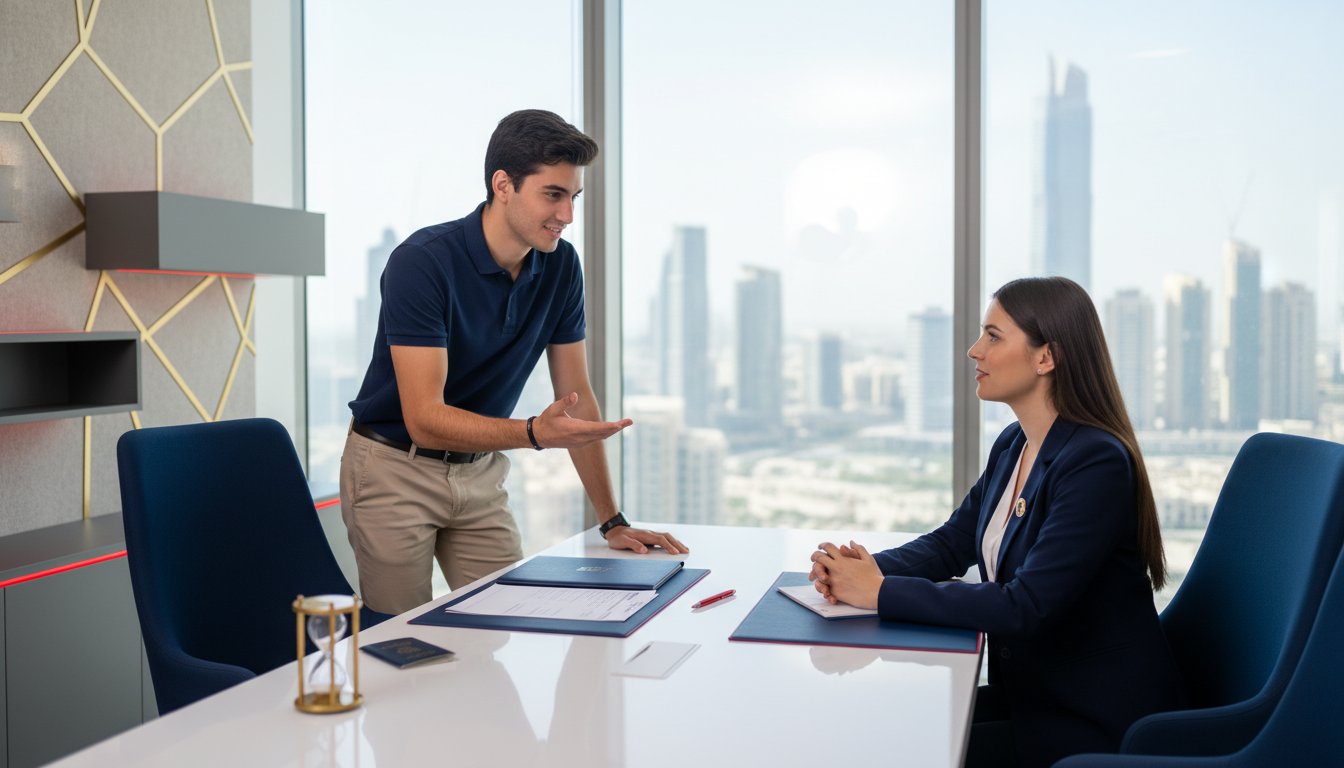
Consular officers operate under immense pressure. They often have only two to five minutes to make a life-changing decision. During this window, they're trained to look for "non-immigrant intent." This means they must be convinced that you don't intend to abandon your home country permanently. Whether you are applying for a F-1 student visa or a European study permit, the officer's goal is to verify facts quickly. They value brevity and directness. If you can't explain your choice of university in two sentences, they may perceive it as a lack of research or genuine interest.
Common Reasons for Student Visa Rejections in 2026
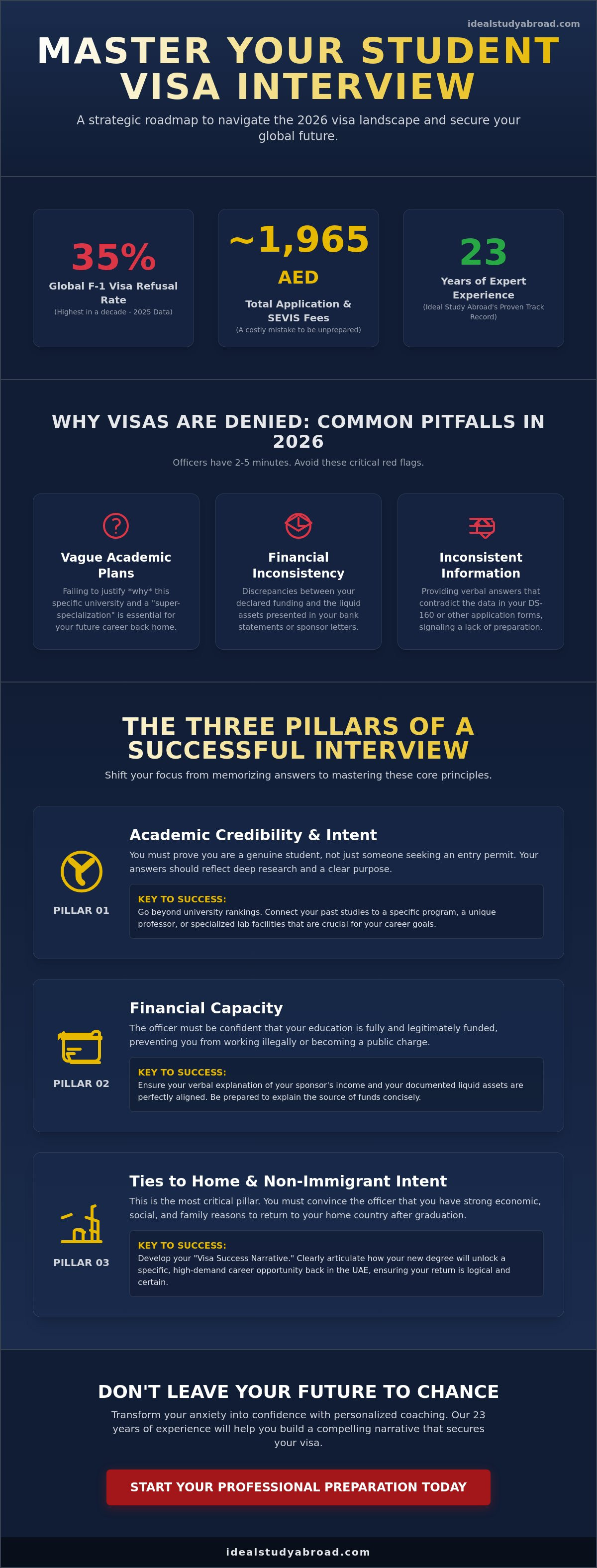
Rejection rates for certain regions soared in 2025, with Indian nationals facing a 61% refusal rate. These denials usually stem from three specific areas:
- Vague Academic Plans: Failing to explain why a specific "super-specialization" is necessary for your career.
- Financial Inconsistency: Discrepancies between your declared funding and the actual liquid assets shown in your documentation. With the DS-160 fee now at 680 AED, a rejection is a costly mistake.
- Inconsistent Information: Verbal answers that contradict the data provided in your initial application forms.
By focusing on these pillars during your visa interview preparation, you can address potential red flags before you ever step into the consulate. Our 23 years of experience shows that students who can articulate their financial stability and academic purpose with confidence are the ones who successfully secure their study abroad future.
Master the Three Pillars of a Successful Student Visa Interview
Most students approach their appointment by trying to memorize answers to hundreds of potential questions. This is a mistake. Consular officers don't use a fixed script; they use a logic-based evaluation. Every question they ask, no matter how random it seems, is designed to test one of three specific areas of your application. By centering your visa interview preparation on these "Three Pillars," you'll be able to handle unexpected follow-up questions with ease and composure.
To clarify your core message, try this exercise: write a single, punchy sentence for each pillar below. This becomes your "North Star" during the conversation. If you can't explain your intent in one sentence, you haven't simplified it enough for a two-minute interview. You must also establish "The Link," which is the logical connection between your chosen degree and a specific problem or opportunity in the UAE. Successful candidates don't just go abroad to study; they go abroad to bring back expertise that is currently in high demand.
Pillar 1: Academic Credibility and Intent
The officer needs to know you're a genuine student, not just someone looking for an entry permit. When they ask "Why this university?", avoid reciting the "About Us" page. Instead, focus on a specific specialization. For instance, if you're pursuing an MBBS in Georgia or Romania, discuss the clinical rotation opportunities or the specific medical technology available at that institution. Linking your previous academic performance in Dubai to the rigorous curriculum of your new program proves you're prepared for the challenge.
Pillar 2: Financial Capacity and Transparency
Financial scrutiny is at an all-time high in 2026. You must discuss your funding with absolute confidence. If your parents are sponsoring you, know exactly what they do for a living and why they've set aside the necessary funds. For those heading to China for fully funded scholarship programs, be ready to explain the terms of the award and how you'll cover personal expenses. Remember, the officer is looking for the source of funds, not just a balance in a bank account. They want to see a stable financial history that supports your long-term stay.
Pillar 3: Establishing Strong Ties to Your Home Country
This is often the most difficult pillar to master. You must demonstrate that you have every intention of returning to the UAE after graduation. Mentioning family responsibilities, property ownership, or specific job offers waiting for you post-graduation is essential. If you're asked about post-study work, be honest about wanting to gain experience, but always pivot back to how that experience will make you a more valuable professional in your home market. To ensure your narrative is airtight, consider booking a session for expert visa interview coaching to refine your delivery. Our 23 years of experience helps us identify the subtle "red flags" in your story before the officer does, allowing you to transform your future with confidence.
Step-by-Step Guide to Practicing for Your Visa Appointment
Success in your student visa journey depends on a structured approach to your final weeks of visa interview preparation. We recommend a 14-day timeline to transform your anxiety into professional confidence. During the first five days, focus on auditing your documentation and deep-diving into your university's curriculum. From days six to ten, you should draft and refine your "Success Narrative." The final four days are reserved for intensive practice. This phased approach prevents the "information overload" that often leads to stilted, memorized answers that officers find suspicious.
While many students practice with friends, we've found that casual sessions often lack the necessary rigor. Friends tend to be supportive rather than critical. For a realistic experience, you need someone who will challenge your logic and simulate the high-pressure environment of the consulate. Your non-verbal communication is just as vital as your words. In the UAE, wearing professional business-casual attire to the embassy signals respect for the process. Maintain steady eye contact and sit with an open, confident posture. Additionally, use a tabbed accordion folder to organize your papers. Never slide a stack of documents under the glass partition unless the officer explicitly asks for a specific item.
Conducting Effective Mock Interview Sessions
Don't just talk to a mirror; record your practice sessions on your phone. Watching yourself helps you identify "filler words" like "um" or "ah" and nervous habits like fidgeting with your hands. Practice answering "stress questions" designed to catch you off guard, such as "What will you do if I reject your visa today?" At Ideal Study Abroad, we use our 23 years of experience to simulate the actual interview environment. We recreate the time constraints and the physical barrier of the glass partition to ensure you aren't startled on the big day.
The 'Golden Rules' of Verbal Delivery
Follow the "Rule of 3" for every answer. Keep your responses to three concise sentences or points. This prevents rambling and shows the officer that you can communicate complex ideas clearly. Our "Honesty First" policy is non-negotiable. If you've had a previous rejection, you must disclose it. Lying about your immigration history can lead to a permanent ban, which would end your study abroad dreams instantly. If you face a language barrier, don't panic. Speak slowly, avoid overly complex academic jargon, and focus on clarity. Your goal is to be understood, not to sound like a textbook.
Navigating Regional Nuances: Europe, China, and Beyond
While many online resources focus exclusively on the American F-1 visa, your visa interview preparation must shift significantly if you're targeting Europe or China. European embassies often prioritize different criteria depending on their membership in the Schengen Area. For instance, Schengen countries like Germany or Poland emphasize precise financial liquidity and specific health insurance requirements. In contrast, non-Schengen destinations such as Bulgaria or Romania often place higher scrutiny on your specific choice of a medical degree and your academic eligibility. Understanding these regional nuances is the difference between a stamped passport and a disappointing rejection letter.
The documentation requirements also vary widely between the East and the West. To stay organized, you should categorize your materials based on the destination's specific legal framework. Use this checklist to ensure you don't miss region-specific essentials:
- European Study Visas: Proof of health insurance valid for the entire Schengen area, a formalized university acceptance letter, and documented proof of accommodation for at least the first semester.
- Chinese Study Visas: Original JW201 or JW202 forms, physical examination records from a recognized UAE clinic, and specific scholarship award letters for those entering fully funded programs.
Specialized Prep for Medical Students (MBBS/Dentistry)
Medical applicants face a unique set of challenges during the interview process. Officers aren't just looking for financial stability; they're looking for "vocational commitment." They want to hear why you've chosen to study MBBS in Georgia or Uzbekistan rather than staying in the UAE. Be prepared to discuss the global recognition of your degree, specifically mentioning WHO or WFME standards. This demonstrates that you've researched the long-term validity of your education and are serious about your future as a healthcare professional. If you're feeling uncertain about these technical questions, book a consultation with our expert team to refine your medical visa strategy.
Winning the China Student Visa Interview
Winning the China student visa interview involves a different strategy that focuses on cultural and economic ties. Officers often look for applicants who understand the "Belt and Road" initiative or the prestige of top QS world-ranking universities. Even if you're enrolled in an English-taught program, showing an interest in the Chinese language (HSK) demonstrates cultural respect and a genuine desire to integrate. You must show that you're prepared for the transition and that you respect the host country's regulations. Our 23 years of experience ensures your visa interview preparation is tailored to these specific expectations, helping you transform your future with confidence.
Transform Your Future with Professional Visa Interview Coaching
The journey to a global campus is paved with high stakes. With global F-1 refusal rates hitting 35% in 2025, leaving your visa interview preparation to chance is a risk you don't need to take. Ideal Study Abroad brings 23 years of seasoned wisdom to your corner. We've guided thousands of students from Dubai and across the Emirates through the complex maze of university admissions and visa processing. Professional coaching isn't just a rehearsal. It's a strategic investment in a multi-year educational journey that will eventually redefine your career trajectory.
Our approach focuses on building a resilient mindset and a clear voice. We provide personalized, one-on-one sessions that are tailored to your specific university and destination. If you're heading to Europe for medical studies or China for a fully funded PhD, we ensure your narrative is airtight. We also provide a comprehensive Pre-departure Briefing. This serves as the final layer of security for your transition. It helps you move smoothly from your home in the UAE to your new life abroad, covering everything from cultural nuances to local regulations.
What to Expect from an Ideal Study Abroad Prep Session
During our intensive sessions, we conduct a detailed review of your DS-160 or specific visa application forms. We look for the smallest inconsistencies that could trigger a refusal. You'll receive a customized Q&A list based on your financial profile and chosen field of study. We also teach stress-management techniques to keep you calm under the officer's gaze. Our final document audit ensures you have every paper organized and ready to present the moment an officer asks. This level of detail has been our signature since we started helping students over two decades ago.
Your Next Steps Toward Success
Success favors the prepared. We encourage all students to start their visa interview preparation at least 4 weeks before their scheduled appointment. This allows ample time to refine your answers and stay updated on the latest 2026 visa policy changes. Regulations can shift rapidly; staying current is vital to your success. Don't let a minor oversight derail your transformative journey. Book your expert visa consultation with Ideal Study Abroad today and take the first step toward securing your study abroad future.
Start Your International Journey with Total Confidence
Success in 2026 requires more than just a stack of documents; it demands a clear, evidence-backed narrative that aligns your academic goals with your future career in the UAE. By mastering the "Three Pillars" framework and following a disciplined 14-day practice timeline, you can navigate the high stakes of the consulate with ease. Whether you're targeting a medical degree in Europe or a prestigious scholarship in China, understanding regional nuances is the final step in turning your study abroad dreams into reality.
Effective visa interview preparation is the bridge between your admission letter and your first day on campus. At Ideal Study Abroad, we leverage our 23 years of experience to provide tailored coaching and personalized pre-departure briefings. We specialize in complex medical and China admissions, ensuring your specific profile is ready for scrutiny. Don't let a two-minute conversation stand in the way of your transformative experience. Secure your study abroad future with expert visa coaching and take the first step toward a global education today. Your future is waiting; let's build it together.
Frequently Asked Questions
What are the most common student visa interview questions?
Officers focus on your academic intent, financial stability, and ties to your home country. You should be ready to explain why you chose a specific institution like a top-tier university in China or a medical school in Europe. Expect questions like "Why did you choose this major?" or "Who is sponsoring your education?". These questions test your credibility and your genuine intent as a student.
How should I dress for my student visa interview in 2026?
You should wear professional business-casual or formal attire to your appointment. In the UAE, first impressions are pivotal to the process. Men often wear a clean button-down shirt with trousers; women choose professional blouses or suits. Avoid casual wear like t-shirts or jeans. Your appearance should reflect the seriousness of your academic goals and your readiness for a professional environment abroad.
What happens if my student visa is rejected?
You can re-apply for a visa after a rejection once you've addressed the reasons for the initial denial. The officer will provide a letter stating the legal grounds for the refusal, often cited as Section 214(b) for a lack of ties. Don't panic; it's essential to analyze the feedback and improve your visa interview preparation before your next attempt. Many students secure their visa on the second try.
Do I need to bring original documents or copies to the interview?
You must bring original versions of all your supporting documents to the interview. While you should have clear photocopies as backups, the consular officer needs to verify the authenticity of your academic transcripts, bank statements, and passport. Presenting forged or incomplete documents can lead to a permanent ban. Organize these originals in a tabbed folder so you can retrieve them quickly during your interview.
How long does the student visa interview usually last?
Most student visa interviews last between two and five minutes. Because of this tight timeframe, your answers must be concise and direct. Officers process hundreds of applications daily and value candidates who can communicate their intent without rambling. Every second counts. This brevity is why focused visa interview preparation is vital; you must make a strong impression almost instantly to succeed.
Can I apply for a student visa if I have a gap in my academic history?
You can apply with an academic gap if you provide a logical explanation for the time away from studies. Whether you were working, gaining a "super-specialization" through certifications, or handling family matters, honesty is the best policy. Officers look for a logical progression in your career. If you can show that the gap helped you clarify your goals, it won't hinder your chances of approval.
What is the best way to prove I will return to my home country?
Proving you'll return involves demonstrating strong professional, financial, or family ties to the UAE. Discuss specific job opportunities in the local market that require your chosen degree. Mentioning family responsibilities or property ownership also helps. You need to convince the officer that your long-term future is rooted in your home country and that your time abroad is strictly for academic growth.
How much money should I show in my bank account for the visa?
You need to show sufficient funds to cover the total costs listed on your official admission documents plus a safety margin. This includes tuition and living expenses. For many programs, this also accounts for the 680 AED application fee and 1,285 AED SEVIS fee. Having a buffer of an additional 20% in your account is recommended to demonstrate financial stability. Officers prefer seeing a consistent banking history.