
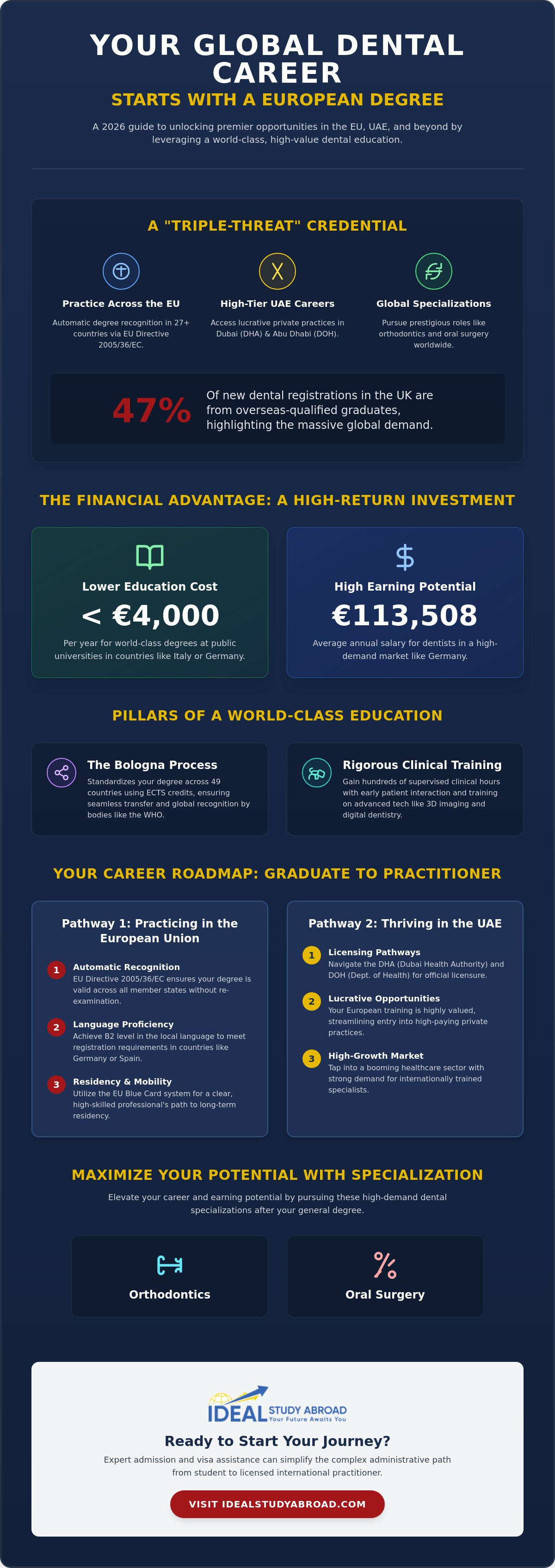
Did you know that 47% of new dental registrations in the UK were recently awarded to overseas-qualified graduates? This statistic confirms that a European dental degree is a powerful, "triple-threat" credential that unlocks immediate residency in the EU, high-tier private practice in the UAE, or prestigious global specializations. You've likely felt the weight of uncertainty regarding degree recognition in Dubai or the complexity of licensing across different borders. It's a high-stakes transition, and feeling a bit of apprehension about the competition is completely normal.
We're here to provide the clarity you need to turn your academic hard work into a life-altering career milestone. This 2026 guide reveals the most lucrative job opportunities after studying dentistry in europe and provides a reliable roadmap for your professional evolution. We'll break down the specific licensing requirements for Germany and Spain, explain the DHA and DOH pathways for the UAE, and identify the high-growth specializations, such as orthodontics and oral surgery, that offer the best long-term outcomes. By the end of this article, you'll have a clear, sequential plan to transition from a student to a successful international practitioner.
Key Takeaways
- Understand how the Bologna Process ensures your European dental degree meets rigorous international standards for immediate global credibility.
- Learn how to leverage EU Directive 2005/36/EC to access diverse job opportunities after studying dentistry in europe through automatic qualification recognition across member states.
- Navigate the UAE’s healthcare tier system and licensing requirements to streamline your transition into high-paying private practices in Dubai and Abu Dhabi.
- Identify the most lucrative dental specializations, such as orthodontics and oral surgery, to maximize your long-term earning potential and career growth.
- Discover how expert admission and visa assistance can simplify the complex administrative journey from student to licensed international practitioner.
The Global Value of a European Dental Degree in 2026
Securing a dental degree from a European institution is more than an academic achievement; it's a strategic entry into a high-stakes global healthcare market. As we move through 2026, the demand for qualified practitioners has reached a critical point. Many nations are facing dental shortages, making this a pivotal year for graduates to capitalize on expanding job opportunities after studying dentistry in europe. Whether you aim to practice in the heart of Berlin or the private clinics of Dubai, your European training serves as a "triple-threat" credential that commands respect and high earning potential.
The return on investment for these programs is exceptionally high. While dental school in the US or Australia can lead to staggering debt, many public universities in Italy or Germany offer world-class education for under €4,000 per year. This lower entry cost, paired with high average salaries, such as the €113,508 average for dentists in Germany, creates a financial advantage that's hard to match elsewhere. However, you must distinguish between EU-recognized degrees and non-EU programs in countries like Georgia or Uzbekistan. While the latter offer quality training, degrees from EU/EEA member states benefit from streamlined recognition that simplifies your path to residency and practice.
Accreditation and the Bologna Process
The Bologna Process is a collective effort to standardize higher education across 49 European countries, ensuring that a dental degree earned in 2026 meets consistent, high-level clinical and academic benchmarks. This system uses ECTS credits, which act as a universal currency for your education. If you study in Romania but decide to work in Scandinavia, your credits transfer seamlessly. High-quality Dental Education in Europe is further validated by WHO and WFME recognition. These global stamps of approval ensure that your degree is respected by licensing boards from the UK's General Dental Council to the UAE's Ministry of Health. By choosing an accredited institution, you're protecting your future career from bureaucratic hurdles.
Why European Training is Highly Regarded
European dental curricula are famous for their rigorous clinical requirements. Unlike programs that delay practical work, European schools often introduce patient interaction early in the degree. You'll gain hundreds of supervised clinical hours, mastering everything from basic extractions to complex restorative procedures before you even graduate. Modern labs in established hubs like Bulgaria and Romania now integrate advanced technology such as 3D imaging and digital dentistry into daily training. This hands-on expertise is why 31% of all registered dentists in the UK are overseas-qualified. Employers know that a European-trained dentist is ready to hit the ground running with both technical skill and clinical confidence.
Practicing Within the EU: Licensing and Residency Pathways
The legal framework for practicing dentistry in Europe is remarkably supportive for those who hold a degree from an EU or EEA member state. EU Directive 2005/36/EC serves as the cornerstone of professional mobility. It establishes a system of "automatic recognition" for dental qualifications. This means that if you graduate from an accredited program in Romania, Bulgaria, or Italy, your degree is legally recognized across all other member states. These regulations create a stable environment for job opportunities after studying dentistry in europe, allowing you to move between member states without retaking grueling board exams. It's a significant advantage that simplifies your professional evolution.
While your medical training is automatically recognized, you must still clear the language hurdle. To practice in Germany, France, or Scandinavia, you'll typically need to demonstrate at least a B2 level of proficiency in the local language. For non-EU citizens, the EU Blue Card system offers a clear path to long-term residency. This high-skilled work permit is designed to attract medical professionals, providing a pathway to permanent residency after a few years of employment. Planning your journey begins with securing a seat at an accredited institution, and you can explore tailored guidance on Ideal Study Abroad to ensure your path is clear from day one.
Financial rewards vary by region but remain highly competitive. In 2026, the average dentist salary in Germany is approximately €113,508 per year. Spain follows with a strong average of €84,653. While starting salaries in Eastern European countries like Poland or Romania may be lower, the cost of living is significantly reduced, often resulting in a high quality of life and the ability to save aggressively for future specializations.
The Licensing Process for International Graduates
Registering with a national dental board is a sequential process. In Germany, you'll apply for your "Approbation," while in Spain, you'll undergo "homologación" and register with the provincial Colegio de Dentistas. A common pitfall is failing to provide certified translations of clinical hour logs or diploma supplements. Some jurisdictions also require an internship year post-graduation to gain full licensure. We recommend starting your documentation gathering six months before graduation to avoid administrative delays that could stall your career momentum.
High-Demand Regions for Dentists in Europe
Shortages in rural sectors have created unique incentives for new practitioners. Rural regions in France and Germany often provide tax breaks or subsidized clinic space for dentists willing to practice outside major cities. Conversely, Poland and Hungary have become global hubs for private cosmetic dentistry, attracting "dental tourists" from across the world. If you prefer public health, Nordic countries like Sweden and Norway offer robust employment packages within their state-funded healthcare systems, often including relocation assistance for qualified foreign dentists.
Career Opportunities in the UAE for European-Trained Dentists
The United Arab Emirates represents one of the most lucrative markets for dental professionals globally, particularly for those holding European credentials. While European countries offer stable residency, the UAE provides a tax-free financial environment and a rapidly expanding private healthcare sector. The region's focus on medical tourism has created a surge in high-end clinics that prioritize Western-trained specialists. Understanding the local regulatory landscape is essential to capitalize on the job opportunities after studying dentistry in europe, as the UAE maintains strict but clear pathways for foreign graduates.
Licensing in the UAE is managed by three primary bodies: the Dubai Health Authority (DHA) for Dubai, the Department of Health (DOH) for Abu Dhabi, and the Ministry of Health (MOH) for the Northern Emirates. European universities are typically viewed through a specific "Tier" system. Graduates from high-ranking institutions in Western Europe often find the credential verification process more streamlined. However, even for general dentists, the UAE requires a minimum of two years of post-qualification clinical experience. This makes your initial years of practice in Europe a vital stepping stone for your eventual transition to the Middle East.
Navigating the DHA and MOH Evaluation
The evaluation process is rigorous and requires meticulous documentation. You'll need to submit your degree certificates, comprehensive clinical logbooks, and a "Good Standing" certificate from your home country's dental board. Most general dentists must pass the DHA or DOH Dental Prometric Exam, which currently consists of 150 multiple-choice questions to be completed in 170 minutes. A passing score of 60% is required to move forward. This administrative transition can be daunting, so focusing on professional visa interview preparation is a critical step for graduates moving between these high-stakes regions.
- Exam Exemptions: Certain European specialists with extensive experience and board certifications may qualify for exam exemptions, though this is assessed on a case-by-case basis.
- Dataflow Verification: All applicants must undergo primary source verification through Dataflow to confirm the authenticity of their academic and professional history.
- Clinical Experience: Ensure your two-year residency or internship year is well-documented, as this is a non-negotiable requirement for licensure.
The Private Practice Boom in the UAE
The UAE healthcare market is shifting toward specialized, luxury-tier services. There is a massive demand for experts in high-end aesthetic dentistry, implantology, and pediatric care. Working for an established international dental group can provide a stable entry point with comprehensive benefits, including housing allowances and annual flights. Alternatively, many experienced European-trained dentists eventually partner with local investors to launch their own boutique clinics. Networking is a powerful tool here; attending regional dental conferences in Dubai or Abu Dhabi can help you build the connections necessary to secure a position in a prestigious private facility.
Beyond General Practice: Specialization and Research Roles
While general practice offers a stable foundation, the most lucrative job opportunities after studying dentistry in europe often lie in specialization. Moving beyond restorative care allows you to command higher fees and work in more complex clinical environments. In 2026, the demand for specialists is outpacing the supply, particularly in private healthcare sectors. Your European degree provides the necessary academic credits (ECTS) to pursue these advanced pathways across the continent, whether through a hospital-based residency or a university Master's program.
Orthodontics, Oral & Maxillofacial Surgery, and Endodontics remain the top-paying niches. Oral surgeons bridge the gap between dentistry and medicine, often operating in high-stakes hospital settings. Endodontists benefit from the rising trend of tooth preservation over extraction. The choice between a Master's and a residency often depends on your target country. Germany's "Fachzahnarzt" system, for instance, is highly structured and requires several years of dedicated clinical training within a recognized institution. This path is rigorous but ensures you emerge as a leader in your field.
Choosing a Specialization for Maximum ROI
Periodontists are seeing a surge in demand as an aging population requires more complex gum health management. If you're looking for cost-effective ways to enter these fields, consider that many students who study medicine in romania find that the country's postgraduate dental programs offer a high ROI due to lower tuition and recognized clinical standards. Pursuing a PhD can also unlock leadership roles in public health or clinical research, which significantly increases your long-term earning potential and professional authority.
Academic and Corporate Career Paths
Your career doesn't have to be limited to the dental chair. The rise of English-taught programs has created a need for qualified clinical instructors and lecturers. In the corporate sector, global manufacturers seek European-trained dentists for product development, clinical trials, and medical device sales. By 2026, dental informatics and AI integration have become standard. This shift opens roles for consultants who bridge the gap between clinical practice and healthcare technology. These non-clinical job opportunities after studying dentistry in europe offer competitive salaries and a unique work-life balance.
Ready to map out your postgraduate journey? Speak with a mentor at Ideal Study Abroad to find the perfect specialization program and secure your future.
Navigating Your Dental Career with Ideal Study Abroad
The foundation of all job opportunities after studying dentistry in europe is the institution where you earn your degree. Choosing a university isn't just about passing exams; it's about ensuring your credentials carry the weight necessary for international licensure. Whether you're aiming for the high-end clinics of Dubai or a specialized practice in Germany, the specific accreditation of your university dictates your professional mobility. Ideal Study Abroad acts as your seasoned global mentor, leveraging over two decades of industry experience to ensure your academic journey aligns with your long-term career aspirations.
Our role extends far beyond simple administrative assistance. We provide a comprehensive roadmap that covers everything from initial university selection to post-graduation licensing support. We understand the logistical realities of moving abroad and the high stakes involved in medical and dental applications. By partnering with us, you gain access to a dedicated team that simplifies complex bureaucratic hurdles into manageable, sequential steps. We focus on your individual success, positioning ourselves as a dedicated partner in your personal and professional evolution.
Expert Guidance for Medical and Dental Admissions
Not all dental programs are created equal. If your goal is to return to the UAE, we prioritize universities categorized in the top tiers by the DHA and DOH to streamline your future license exemptions. For those wishing to remain in the EU, we focus on institutions with strong clinical reputations in countries like Bulgaria and Romania. Our expertise in mbbs abroad consultancy services extends directly to dental excellence, ensuring you receive the same level of rigorous application management and document verification required for top-tier medical placements.
- Tailored Selection: We match your academic profile with universities that offer the best ROI and clinical exposure.
- Application Management: Our team handles the entire documentation process for programs in Bulgaria, Romania, and Georgia, reducing the risk of administrative rejection.
- Cultural Readiness: Our pre-departure briefings prepare you for the professional and cultural shift of living in Europe, ensuring you hit the ground running.
Secure Your Future in Global Dentistry
With 20 years of experience, we've encountered nearly every scenario in international dental education. This seasoned wisdom allows us to anticipate challenges before they arise. We take pride in the success stories of our graduates who are now practicing in prestigious clinics across Europe and the Middle East. Our commitment doesn't end when you receive your admission letter. We provide ongoing guidance on licensing pathways, helping you navigate the transition from a student to a licensed practitioner in your chosen region. Don't leave your international career to chance; partner with a consultant who understands the global healthcare landscape.
Your journey toward a successful dental career begins with a single, informed step. Book a consultation with Ideal Study Abroad today to map your path to the best job opportunities after studying dentistry in europe and beyond.
Secure Your International Dental Future
A European dental degree is a transformative asset that bridges the gap between academic ambition and a high-stakes global career. You've seen how automatic recognition within the EU simplifies your path to residency. Meanwhile, the tax-free benefits and private practice boom in the UAE offer an unmatched financial reward for your specialized expertise. By focusing on high-demand niches like orthodontics or oral surgery, you position yourself at the forefront of the 2026 healthcare market.
The path to these job opportunities after studying dentistry in europe requires more than just clinical skill; it demands a strategic roadmap and meticulous administrative preparation. With over 20 years of expertise in medical admissions, Ideal Study Abroad serves as your dedicated partner in this professional evolution. We provide specialized guidance for DHA and MOH licensing pathways and comprehensive pre-departure briefings to ensure your transition is seamless and successful.
Start your dental career journey with Ideal Study Abroad today and turn your vision of practicing dentistry abroad into a logistical reality. Your future as a global dental professional is within reach, and we're here to guide every step of the way.
Frequently Asked Questions
Is a dentistry degree from Romania or Bulgaria recognized in the UAE?
Yes, degrees from accredited universities in Romania or Bulgaria are recognized by the UAE's health authorities, including the DHA and MOH. You'll need to complete two years of clinical experience after graduation and pass the relevant Prometric exam. This path is a reliable way to access high-paying job opportunities after studying dentistry in europe once you've met the local residency requirements.
Can I work in the UK or USA after studying dentistry in Europe?
You can certainly work in the UK or USA, but you must follow specific national pathways. EU degrees are currently recognized for registration with the UK's General Dental Council until 2028. In the USA, you'll need to pass the Integrated National Board Dental Examination (INBDE) and usually complete a two-year Advanced Standing program to earn a local DDS or DMD degree. These steps ensure your European training meets local standards.
Do I need to learn the local language to study dentistry in Europe?
You don't need to know the local language to enroll in English-taught dental programs across Europe. Many top universities in Romania and Bulgaria offer full degrees in English. However, you'll need to learn the local language for clinical rotations with patients and to obtain a license to practice locally after graduation. This dual-language approach prepares you for both international and local career paths.
What is the average salary for a dentist in Europe in 2026?
Salaries for dentists in 2026 depend heavily on the specific region and your level of specialization. Germany currently offers an average annual salary of €113,508, while dentists in Spain earn approximately €84,653. These figures represent strong job opportunities after studying dentistry in europe, especially when compared to the lower cost of living in many European hubs. Specializing in fields like orthodontics can push these earnings even higher.
How long does it take to get a dental license in the UAE after graduating from Europe?
Obtaining a dental license in the UAE usually takes between three and six months after you've completed your two years of mandatory clinical experience. This timeline includes Dataflow verification of your documents and passing the DHA or DOH Prometric exam. Ensuring your paperwork is perfect from the start prevents common administrative delays. We recommend starting your document preparation well before your two-year experience mark concludes.
Are there scholarships available for dental students in Europe?
Scholarships are available through various European government programs and individual university merit schemes. While our consultancy focuses on admission and placement, we guide students toward regions like Italy or Germany where public tuition is exceptionally low, often under €4,000 per year. Many students also utilize Erasmus+ grants for exchange programs within the European Union to reduce their overall financial burden.
What are the most in-demand dental specializations for 2026?
Orthodontics, Oral & Maxillofacial Surgery, and Endodontics are the most in-demand specializations for 2026. These roles offer the highest earning potential and are sought after by luxury clinics in the UAE and private practices across Western Europe. Specializing in these fields significantly enhances your long-term career trajectory. We help you identify the best postgraduate programs to ensure your specialization is recognized globally.
Can I practice dentistry in Germany with a degree from another EU country?
Yes, you can practice in Germany using a dental degree from any EU member state thanks to the automatic recognition system. This legal framework simplifies the process of obtaining your Approbation. You don't have to retake your dental exams, though you must demonstrate a high level of German language proficiency, typically at the C1 level for medical professionals. It's a straightforward path for ambitious graduates.